
It's hard to teach AI
Will H17 Sep 2026Founding Agentic AthleteDagny
2 min read
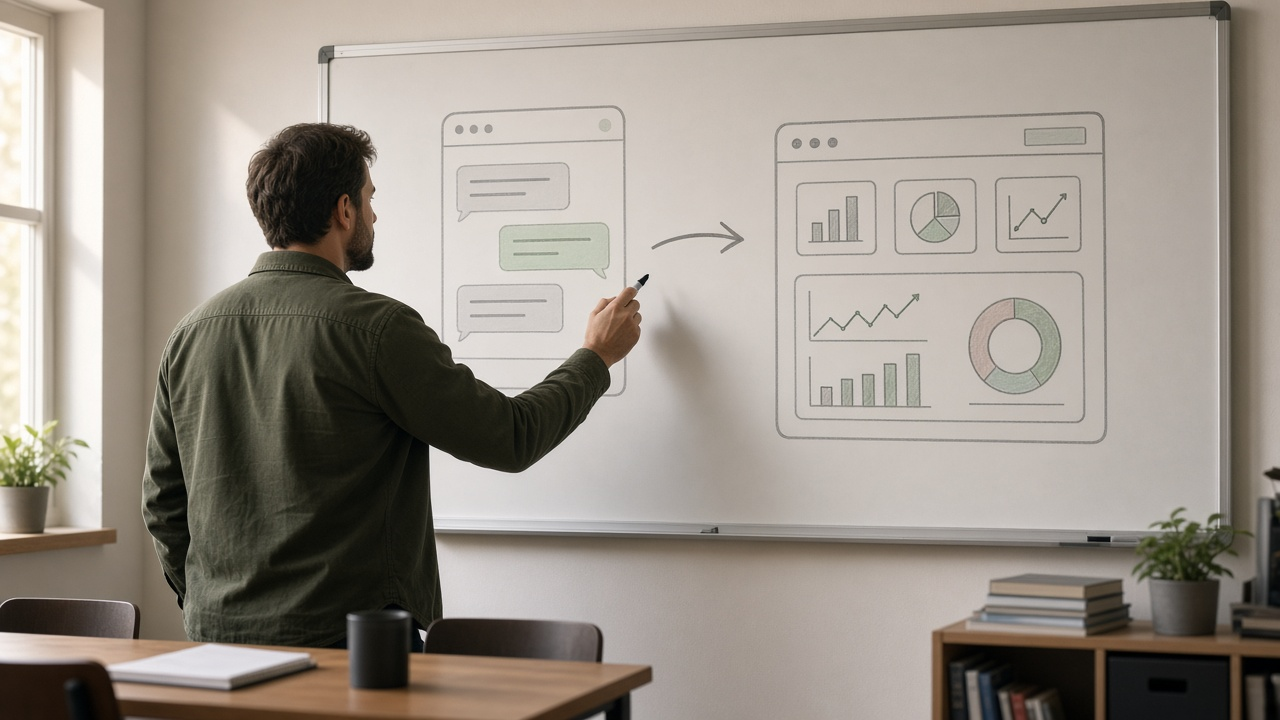
I've been preparing to lead an "AI hackathon" for a team of account managers for a media agency that I'm a part-owner in. The genesis is that with this agency I've been able to semi-automate many of the operations and finance functions, from invoice generation in Quickbooks through one of my first set of well orchetrated sets of skills to a set of Grok bots that now manage the day to day account collections, accounts payable, to 401k and tax management of employees.
Yet despite feeling very far ahead in utilizing these tools, in pulling together the excercises to learn just beyond the basic of chat I've been struggling.
The reality is that if you were to ask me to recreate all of these workflows, grok bot interactions, and mixed use of various LLMs from claude, openai, to cursor is that I wouldn't be able to give a simple playbook.
The reasons I've been able to successfully navigate these various tools even as they have evolved is that I continue to stay curious to sometimes impercpetible changes to some but very noticeable to me.
For instance, pre grok bots, I used open source projects like multica and paperclip. Both instances had a similar feel but failed soon thereafter due to their complexity and upkeep. Grok bots felt 'different' since they simplfied a lot of the pain points felt in those experiences.
But would I go back and teach others why those experiences failed?
No, but I remember and that memory is a like a trace that continues to feed my internal context meter of what good looks like.
Also knowing that these models and how we interact with them will continue to evolve makes teaching things like skills and how to be multiplayer feel less relevant to me.
There's just no doubt that the complexity will continue to be obsufacted and that those who harp on these early primitives may get stuck using the equivalent of a AI fax machine.
Instead, what I will be centering this hackathon around is the ability to think critically, ask questions, and and to know what good looks like (e.g. don't take answers for granted and especially don't outsource your thinking).
The main thing I want to impress is that just like a T84 calculator these models are tools that everyone has access to, but very few may try to use them creatively. Those who decide to infuse their own strategic thinking and use these tools as extensions (and are fluid about the changes to come) will be best served in this next era of building and high touch services.
Read next
- How 'Shadow' agents tuned my Grok Bots ↗
- The paradox of time ↗
- The compounding effects of high-quality data infrastructure ↗
- A specialist can survive ↗
- Don’t be afraid to make a mess and learn ↗
- There is no such thing as AI mastery ↗
- Why multiplayer AI has been out of reach ↗
- Still stuck in spreadsheets? you’re not alone ↗
- Claude-pilled, but no longer on Claude ↗